Currently browsing category

Articles, Page 17

Concerning functional fatwas and disfunctional Muftis

By Abu Aaliyah
“Do fatwas change with place and time; if so, how? Is Islamic fiqh fossilised? Do we require a new fiqh for the 21st century? Are classically-trained muftis fit for purpose in today’s world? Should the ‘ulema be trained in the core philosophical underpinnings of modernity? Does the new maqasid-based fiqh offer a better way forward than the older models? Should Western Muslims rely on scholars from outside the West? These are the core concerns explored in this latest blog. In the course of the discussion, there is a brief reflection about just how legitimate the notion of a modern Islamic ‘state’ is…”
Why shouldn’t Muslims be next?

By Rabbi Allen S Maller
“During October 1517 Martin Luther wrote the “The 95 Theses,” a list of questions and propositions for Christians to debate; and on the last Friday in October, 1517 he nailed a copy of his 95 Theses to the door of the Wittenberg Castle church. None of the issues he chose to debate then were about Jews or Muslims; although later he had lots of negative things to say about both religions. 

Now, for the Reformation’s 500th anniversary, Germany’s main Protestant church has officially renounced its mission to convert Jews to Christianity. As a rabbi I applaud this statement. However I hope and pray that the church will also stop trying to convert Muslims to Christianity…”

Islam enjoins modesty for both men and women

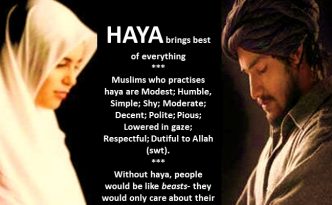
By Moin Qazi
“Outward modesty means behaving in a way that maintains one’s own self-respect and the respect of others, whether in dress, speech or behaviour. Inward modesty means shying away from any character or quality that is offensive to God. ..”

Islam is moderate. Some clerics have made it harsh.

By Moin Qazi
“The theme of moderation in religious practice has been the leitmotif in Islamic literature from the time of Prophet Muhammad. In the Quran and the Prophetic traditions that amplify it, Muslim women and men are called upon to exercise moderation in all aspects of their religious life.  The Prophet confirms the essence of Qur’an’s message: “Make things easy, do not make them difficult.”

Exile towards the beginning…

By Prof Tariq Ramadan
“Someday we are bound to come back to the beginning. Even the most distant pathways always lead us inward, completely inward, into intimacy, solitude between our self and our self—in the place where there is no longer anyone but God and our self.”

Ashura and Muharram of Sunni and Shia

By Dr Aslam Abdullah
“Imam Hussain,the grandson of the Prophet, lived his life the way he watched his grandfather live it. He embodied the qualities of the prophet in his character and he remained deeply committed to the Quranic values of justice and equality. “

FORGIVENESS: ISLAM’S PATH TO PEACEFUL FELLOWSHIP

By Moin Qazi
“There are few virtues which have as powerful an aura of divinity as forgiveness. Forgiveness is an opportunity to adorn our souls with Godliness. Forgiveness can take many forms, but at its most basic, it is the offer of goodness to the one who has hurt you…”

 Jews and Muslims United For This New Year

By Rabbi Allen S Maller
“The Jewish and Muslim New Year will fall on the same day, or days this year; September 20, at sunset and September 20 until it gets dark. This is not surprising since both Islam and Judaism use a lunar calendar, which begins with the first evening sighting of the new moon. ..”