Currently browsing author

Editors, Page 40

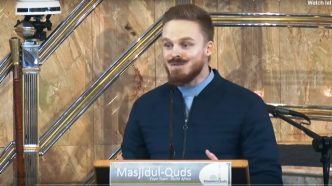
Srebrenica: Remember the past to protect the future

By Dr Husni Hammuda

The cold-blooded murder of 8,000 Bosnian Muslim men and boys by Serb nationalists in 1995 has become known as the Srebrenica Genocide. Dr Husni reminds us of the lessons to be learned. The rising far-right nationalism and Islamophobia in Europe today suggests that many have not yet taken the lessons of history…”

Hajj, The Inward Spiral

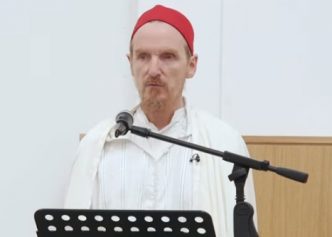
By Shaykh Abdal Hakim Murad (Tim Winter)

“Labbaik! Here I am, (at your service) O Allah!” is the heartfelt chanting of the Hajj. It is a logical echo of that original Shahada, (bearing witness) of that moment before time and space, when Allah called forth the souls of every human being that ever was and ever will be, to testify concerning themselves.  “Alastu bi Rabbikum?” (Am I not your Lord?), asked Allah. We all replied in one thunderous voice: “Bala shahidna!” (Yes we bear witness! lest we say on the Day of Awakening, that we were not mindful of this!)”

Hajj: An Inward Journey

By Shaykh Abdal Hakim Murad (Tim Winter)
“Muslims, privileged heirs of the purest monotheism, are honoured to bow towards the Ancient House five times in every day. The House thus becomes a great vortex of prayer. If one were to view this earth from above, with a light visible in the heart of every Muslim at prayer, one would see an endless series of luminous ripples and waves moving around the globe. As the people of the West are increasingly honoured by the presence of Islam, formerly dark regions are now filling up with points of light, as the absolute call of ‘No god but God’ is heard triumphantly in the spiritual ruins of materialistic cities. Five times a day and more, the Qibla draws our attention away from what matters so much less. ‘Allahu Akbar’, God is Greater, means: turn towards the symbol of His unknowable, unfathomable, majestic Unity and Beauty…”

Modern Challenges to the spirit of Hajj

By Aslam Abdullah
“When the Prophet performed his only Hajj, the only provision that he had with him was worth of no more than four dirham as narrated in several books of ahadith.
Hajj was meant to teach the pilgrims endurance and perseverance for higher causes, yet it has been turned into an exercise in convenience. Hajj was meant to express the utmost humility in the presence of the rest of humanity by declaring that “Here I am, Here I am, I will not make anyone Allah’s partner. Allah is the one who is in control of everything and He alone is the one who is the source of all blessings and praise.” Yet, today, Hajj, for many has become, a badge, a symbol of spiritual pride…”

Reflections on the Hajj

By Arshad Gamiet
“Hajj is not only a journey through geography and history. It is perhaps most importantly, an inward journey to our own centre, to the human heart, the locus of our personality …. what emotions, what desires lurk there in the hidden recesses of the spiritual heart?”

The Goal of the Shari‘ah is Justice, Not Equality

By Abu Aaliyah
“IN SPEAKING OF JUSTICE, many well-intended Muslims are unconsciously secularised. For their discourse about justice (Ar. ‘adl, qist) is so often scarred by failing to grasp its Quranic essence: ‘To put a thing in its rightful place.’1 Which is to say, justice is to give things their proper due – at the due time, the due place, and in due measure.

This requires possessing knowledge about the value and measure of things, as Islam assigns to them, so as to give them their due. ‘Hence,’ Ibn al-Qayyim wrote, ‘knowledge and justice are the root of every good, while injustice and ignorance are the root of every evil.’2”

Resilience in Muslims, despite Islamophobia

By Dr Zubair Chaudhry
“Resilience is a wonderful thing. Allah has created it in our nature, so that when we’ve had a trial, tribulation or tragedy, we can endure it with patient perseverance and come out stronger for that experience…”

The worlds most ‘Islamic’ country is … New Zealand?

“New Zealanders came together, regardless of color or creed, to mourn and to help the grieving Muslim community recover. Social integration and empathy are sacred in Islam. New Zealand’s population is only 1 percent Muslim, but …

ACCORDING TO A NEW ANALYSIS, NEW ZEALAND IS THE COUNTRY THAT MOST CLOSELY FOLLOWS QURANIC PRINCIPLES.
The Islamicity Indices, compiled by the Islamicity Foundation, a U.S.-based nonprofit, measure world governments by how well they adhere to the Islamic principles set forth in the Quran, including adherence to interest-free finance, equality of education, property rights and animal rights, among others. They don’t include the personal duties required of Muslims, like prayer, fasting and pilgrimages..”