

Eid Khutbah 2026: How do the angels see you now?
Omar Suleiman
Dr Omar Suleiman reviews our achievements over the month of Ramadan, by asking the question: “How do the angels see you now?”
Omar Suleiman
Dr Omar Suleiman reviews our achievements over the month of Ramadan, by asking the question: “How do the angels see you now?”
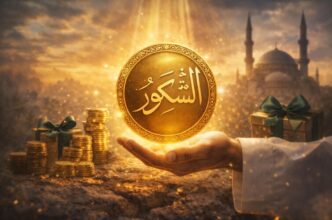
By Shaykh Anwar Mady
In this khutbah, Sheikh Anwar Mady continues his series on the Beautiful Names of Allah (Asmā’ Allah al‑Ḥusnā), focusing specifically on the divine name Ash‑Shakūr (ٱلشَّكُور) — The Most Appreciative, The One Who Rewards Abundantly for Small Deeds.
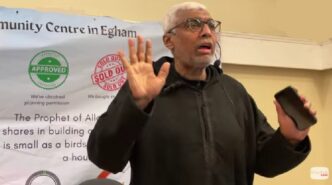
By Essam Mahgoub
The Qur’an contains not only clear instructions but also subtle, deeper meanings that can be grasped only by a heart enlightened by the remembrance of Allah. Ustadh Essam Mahgoub stresses that true engagement with the Qur’an requires both recitation and reflective understanding. A major theme of the khutbah is the Qur’an’s use of three distinct terms for wrongdoing — ithm, dhanb, and sayyi’ah — and how each carries a different spiritual and legal implication:
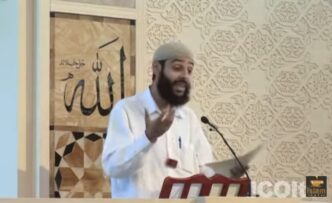
By Ustadh Hassan Elwan
Every believing Muslims desires to have a good ending. During our lifetime we make mistakes, commit sins and things get messy, but we all want to be in the best of our deeds when we die. T is khutbah explains how we can stay focussed, how we can avoid the pitfalls and distractions that are really traps set by Shaitaan.

By Ahmed Baghdadi
Understand the Qur’an by learning the context of revelation, not just literal translations.
The Qur’an guides through three core themes:
Knowing Allah.
Stories of past nations.
Practical guidance for life.

by Shaykh Anwar Mady
Allah rewards goodness with goodness. Stories from earlier nations illustrate how forgiveness, easing others’ debts, and showing mercy can lead to Allah’s mercy on the Day of Judgement. Sheikh Anwar urges the congregation to enter Ramadan with renewed sincerity, generosity, and devotion to the Qur’an, praying for Allah’s acceptance and guidance.

By Ahmed Gaber
This khutbah = emphasises the critical link between halal sustenance and the acceptance of supplications (du‘a). Drawing on an authentic hadith narrated by Abu Huraira in Sahih Muslim, he explains that Allah is pure and accepts only what is pure. The same command given to prophets—“Eat from what is halal and do good deeds”—applies also to believers.

By Ibrahim Hussain
In this Friday khutbah, Imam Ibrahim Hussain emphasises two critical aspects of a Muslim’s life: valuing time as a divine gift and choosing righteous companionship. He begins by reminding the congregation of the Qur’anic command to maintain taqwa and the prophetic teaching that actions are judged by intentions.